Jaipal Julius Hanna Award Ceremony Report 2022
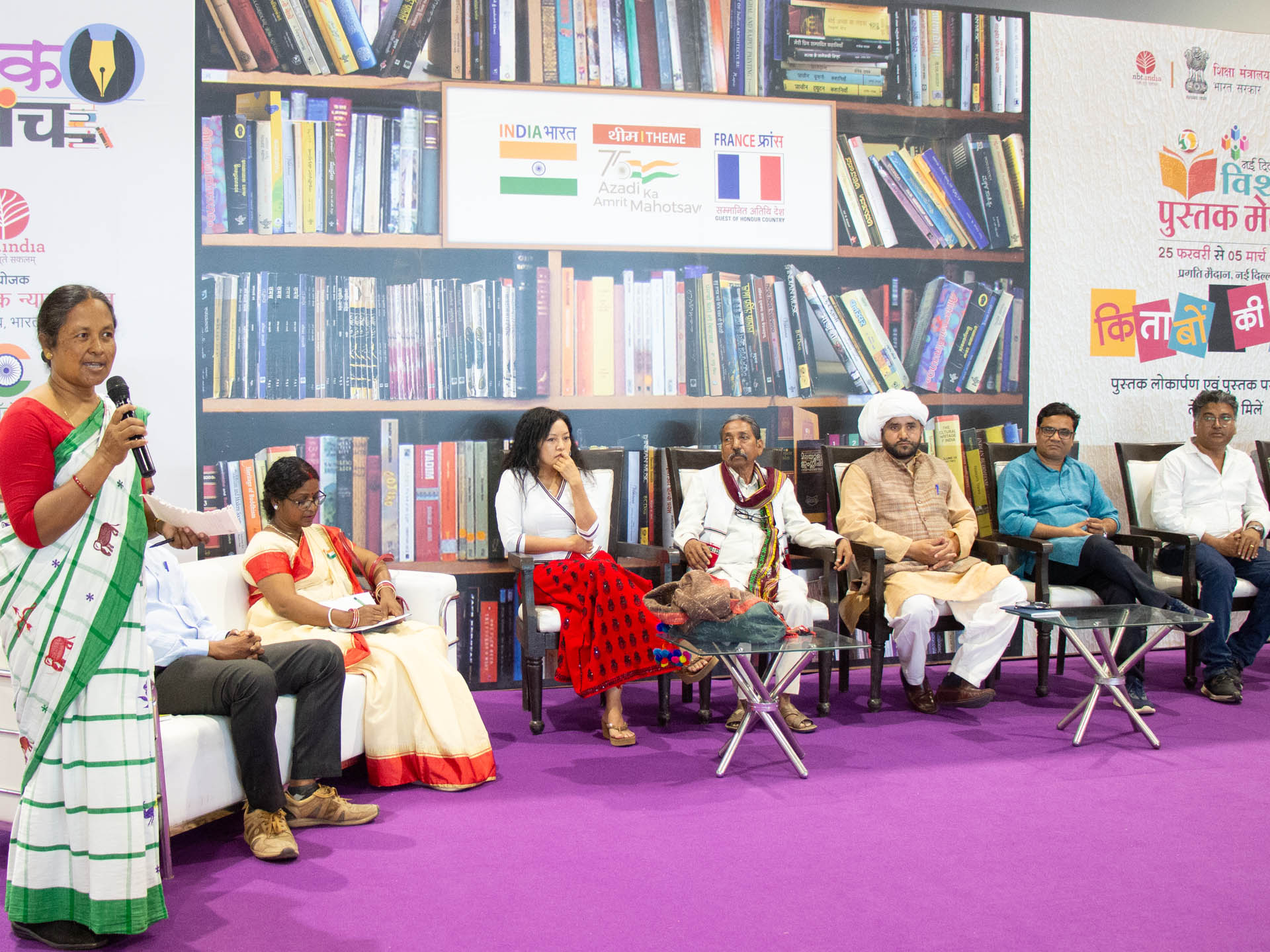
The first Jaipal-Julius-Hanna Literary Award was conferred upon three distinguished Adivasi writers from across India
The first Jaipal-Julius-Hanna Literary Award ceremony, along with a multilingual First Nations (Adivasi/Tribal) and Indigenous poetry reading, was organised on Sunday, 6th November 2022, at the Press Club Auditorium in Ranchi (Jharkhand). The event was hosted by Jharkhandi Bhasha Sahitya Sanskriti Akhra in collaboration with the AHRC Research Network London (UK), Tata Steel Foundation, and the Pyara Kerketta Foundation.
In this inaugural edition of the award, three distinguished Adivasi writers were honoured: 1. Ramon Longku (Tangsa community, Arunachal Pradesh) for his evocative literary work "Kongkong-Fangfang" 2. Sunil Gaikwad (Bhil community, Maharashtra) for his historical novel "Dacoit Devasingh Bhil ke Bacche" 3. Ujjwala Jyoti Tigga (Oraon community, Delhi) was posthumously awarded for her poetry series "Dharti ke Anam Yoddha" (Unsung Warriors of the Earth)
The programme was chaired by Gloria Soreng, President of the Akhra, and coordinated by General Secretary Vandna Tete and writer-activist Ashwini Kumar Pankaj.

The chief guest was veteran Gujari Adivasi writer from Jammu & Kashmir, Jan Mohammad Hakim, who said, “It is our duty to remember our ancestors and ensure they are etched into the pages of history.” Speaking about his own Gujjar-Bakarwal community, he emphasised that their struggles are no different from other Adivasi communities in the country. He noted that Gojri is the third most spoken language in Jammu & Kashmir and should be included in the Eighth Schedule of the Indian Constitution. He also shared that significant literary work is being done in Gojri language today.
Awardee Ramon Longku expressed his gratitude and shared that the event offered him a great opportunity to learn. He presented a traditional Tangsa agricultural folk song, “Sailo Sailai Asailai Chai…” (Let us sing a song), which received heartfelt appreciation from the audience.
Sunil Gaikwad, in his address, reflected on how British colonial authorities had branded Adivasi revolutionaries in Maharashtra as “dacoits.” His novel “Dacoit Devasingh Bhil ke Bacche” is inspired by the life of his grandfather, who was one such revolutionary.
Dr Anuj Lugun, noted poet and academic, observed that Adivasi literature is evolving with an organic, indigenous voice, deeply rooted in cultural expression. He stated, “This literature is not merely individual in nature but reflects collective emotions and resistance, expressed through critical and reflective writing.”
Other speakers included Sundar Manoj Hembram and Dr Savitri Baraik, who shared their insights on the direction of contemporary Adivasi literary and cultural movements.
A major highlight of the event was the multilingual Adivasi poetry reading, where poets recited their works in various indigenous languages and dialects, including Tangsa, Bhili, Oraon, Mundari, Santali, Ho, and Gojri. The diversity and richness of oral traditions were celebrated and warmly received by the audience.
This landmark event served not only to honour Adivasi writers but also to create a space for dialogue, solidarity, and cultural pride. Writers, students, researchers, journalists, and social workers from across India gathered to celebrate the vibrancy and strength of Adivasi storytelling.
In summary, the first Jaipal-Julius-Hanna Literary Award ceremony was not merely an award function, but a powerful cultural gathering that brought attention to the depth, diversity, and resilience of Adivasi literature. It marked a historic step toward giving national recognition to indigenous voices and collective cultural memory.
Report by Akhra Team